
When people say a job is "good" or "toxic," they're compressing dozens of experiences into one word. To evaluate a workplace properly, break it into the specific parts that decide whether someone stays another year or starts quietly applying elsewhere.
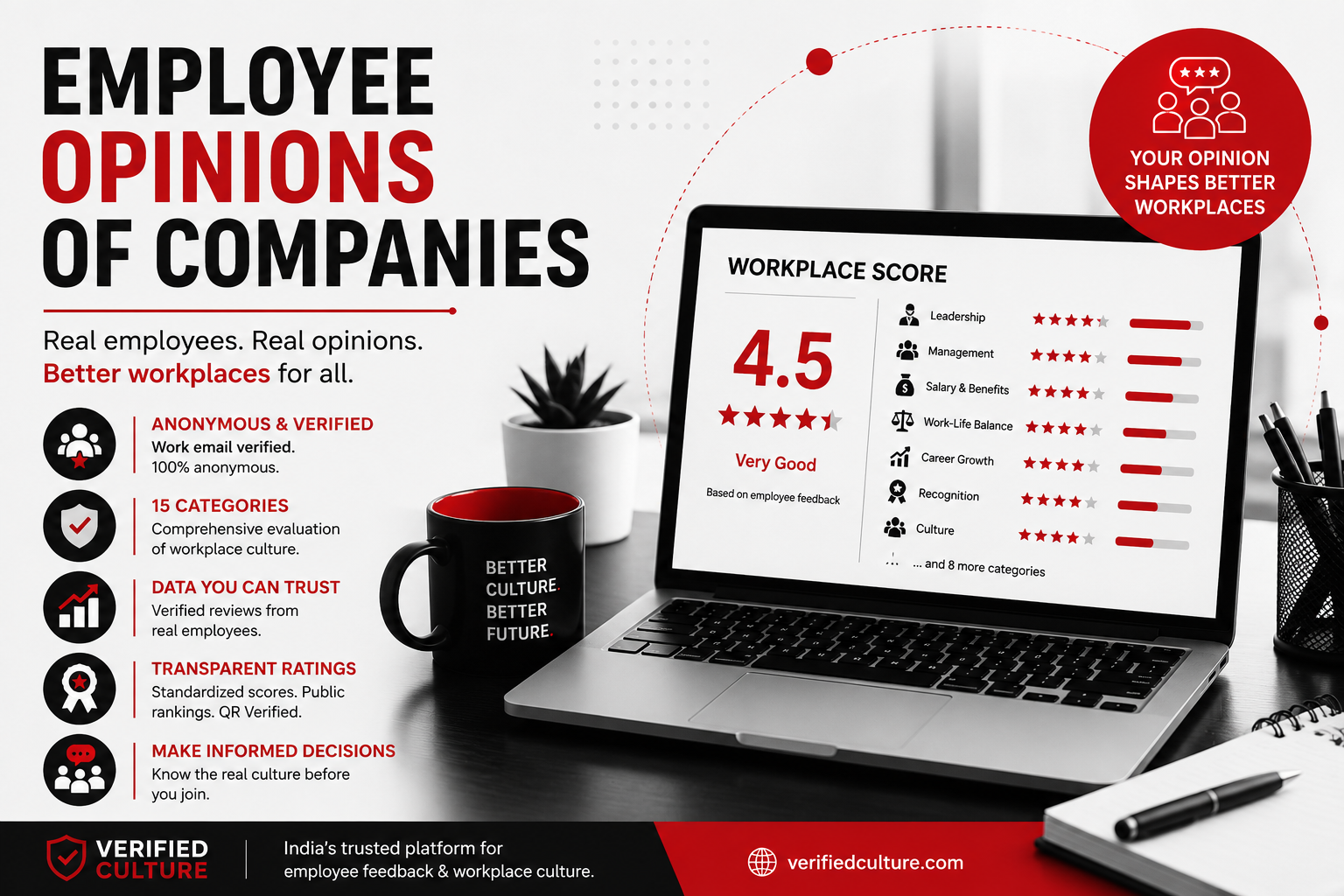
These are the 15 areas that Verified Culture asks employees to score, and a strong framework for your own research.
1. Leadership
What it measures: How honest, visible, and clear-headed senior leaders are about direction and decisions.
What good looks like: Leaders explain the "why" behind decisions, admit when plans change, and are reachable. You can describe the company's strategy after a few conversations.
Warning signs: Sudden reorganizations with no explanation, leadership that only appears during crises, contradictory messages from different executives.
2. Management
What it measures: The quality of your direct manager: support, fairness, and coaching.
Why it matters most: Your manager shapes your daily experience more than any other single person. A great manager inside a mediocre company can still give you a good job. The reverse is rarely true.
Warning signs: Managers who can't describe how they develop their team, who take credit for others' work, or whose direct reports seem guarded when you meet them.
3. Salary & Benefits
What it measures: Whether pay and benefits feel fair for the role and the market.
What good looks like: Transparent pay ranges, consistent raises, and benefits that match what was promised.
Warning signs: Refusal to share a salary band, vague "competitive" language, big gaps between titles and pay, or benefits that disappear in the fine print.
4. Work-Life Balance
What it measures: Sustainable hours, flexibility, and respected personal boundaries.
What good looks like: People log off on time without apologizing. Leave is actually taken. Messages after hours are the exception, not the expectation.
Warning signs: "Flexible" that only flows one direction, praise for people who answer at midnight, and managers who ask about your plans after you've booked leave.
5. Career Growth
What it measures: Real opportunities to be promoted, learn, and take on new challenges.
What good looks like: A clear path for your role, examples of recent internal promotions, and managers who talk about your development unprompted.
Warning signs: Nobody can name a recent promotion. Titles are static. Growth means "more work for the same role."
6. Recognition
What it measures: Whether good work is noticed, credited, and rewarded promptly.
Why it matters: Feeling unseen is one of the quietest drivers of resignation. People don't need constant praise; they need to know their effort counts.
Warning signs: Credit consistently flows upward, wins are only mentioned when they benefit leadership, and rewards are unpredictable.
7. Diversity
What it measures: Representation across levels and fair treatment regardless of background.
What to check: Who is in senior roles? Does representation thin out as seniority increases? Are pay and promotion outcomes consistent across groups?
8. Inclusion
What it measures: Whether every voice is invited in and genuinely heard in decisions.
Diversity vs inclusion: Diversity is who's in the room. Inclusion is whether they're listened to once they're there. A workplace can be diverse on paper and still silence people in practice.
9. Culture
What it measures: What it actually feels like to work here day to day.
What to look for: How colleagues talk about each other, whether people collaborate or compete, how celebration and conflict are handled.
10. Toxic Behaviour
What it measures: Freedom from bullying, politics, and gossip. (A higher score means a healthier workplace.)
Warning signs: Favouritism, public shaming, blame-shifting, rumour culture, or a "tolerated genius" whose behaviour everyone works around.
11. Micromanagement
What it measures: Trust and autonomy given versus constant oversight. (A higher score means more autonomy.)
Warning signs: Approval required for small decisions, constant status check-ins, and managers who redo your work rather than coach you.
12. HR Support
What it measures: How responsively and fairly HR handles issues and requests.
Why it matters: You won't think about HR until you need it, and by then it's too late to find out whether it works. Ask how complaints are handled and what happens afterwards.
13. Infrastructure
What it measures: Quality of tools, workspace, and resources needed to do the job well.
Warning signs: Outdated systems, broken processes, and a workplace where people spend more time fighting their tools than doing their work.
14. Learning
What it measures: Access to training budgets, mentorship, and skill development.
What good looks like: A real budget, protected time to use it, and examples of people who have.
15. Psychological Safety
What it measures: Freedom to speak up, disagree, or admit mistakes without fear.
Why it may be the most important of all: Teams that feel safe surface problems early. Teams that don't hide them until they explode. It affects quality, innovation, and even physical safety in high-risk industries.
If you only have time to dig into five of the fifteen, start with Management, Psychological Safety, Work-Life Balance, Leadership, and Salary & Benefits. Those are the areas that most often decide whether a job is sustainable.
How to Research Company Culture: A 7-Step Process
Here's a practical workflow you can complete in a few focused hours before you accept any offer.
Step 1: Define your non-negotiables first
Before reading a single review, write down three to five things you can't compromise on. Examples: a manager who coaches, predictable hours, transparent pay, a safe environment to disagree. Without this, you'll be swayed by whatever you read last.
Step 2: Check verified, structured employee feedback
Start with sources that confirm reviewers are real employees and ask consistent questions. On Verified Culture, for example, every response is checked against a work email address, the same 15 questions are asked everywhere, and verdicts are only issued once a meaningful share of staff has responded.
You can browse the rankings or use the compare tool to put two employers side by side, which is especially useful when you're choosing between offers.
What to look at:
- The overall score and the individual categories. A decent average can hide a catastrophic score in one area.
- Whether the weakest categories are ones you care about.
- How recent the data is.
- Whether a certificate or verdict has been issued and when it expires.
Step 3: Read the pattern, not the outlier
One dramatic story proves little. Five similar stories prove a lot. When reading any feedback, look for repeated themes: the same manager style, the same complaint about workload, the same praise for leadership. Patterns are signal; single anecdotes are noise.
Step 4: Look for employee voices outside official channels
Search for the company name with terms like layoffs, turnover, lawsuit, safety, and resignation. Check news coverage, regulatory filings where relevant, and independent interviews. Pay attention to what former employees say once they've left. They have less to lose.
Step 5: Talk to real humans
Use professional networks to find people who currently work or recently worked there, ideally in the team you're joining. Ask short, specific questions:
- "What's the best thing about working there that doesn't show up in the job ad?"
- "What would you change if you could?"
- "How does your manager handle it when something goes wrong?"
People are more candid when you're clearly respectful of their time and don't ask them to criticize anyone by name.
Step 6: Audit the hiring process itself
How a company treats candidates is a preview of how it treats employees. Notice:
- Were interviews organized and respectful of your time?
- Did people communicate clearly and promptly?
- Was the process consistent, or did requirements keep changing?
- Were you pressured to accept quickly?
Exploding offers and pushy deadlines are rarely a sign of a calm, confident culture.
Step 7: Compare against your non-negotiables
Go back to the list from Step 1. Score the company honestly on each point. If the answer is "I don't know," that's valuable information too, and it tells you what to ask in your next conversation.
20 Interview Questions That Reveal the Truth
The questions you ask are a test. Thoughtful interviewers welcome them. Defensive ones tell you something. Use these, adapted to your role.
About leadership and direction
1. What are the company's top priorities this year, and how do they affect this team?
2. Can you describe a recent decision leadership changed their mind on, and why?
3. How does leadership share bad news with the company?
About management
4. How would you describe your management style in your own words?
5. How do you give feedback, and how often?
6. What does success look like in this role at 6 and 12 months?
7. Could I speak with someone currently on the team?
About workload and balance
8. What does a typical week look like, including the busiest ones?
9. When was the last time someone on the team took a long holiday, and how was coverage handled?
10. Are there expectations about replying outside normal hours?
About growth and learning
11. Can you share an example of someone who was promoted from this role?
12. Is there a learning or training budget, and how much of it was used last year?
13. How are development conversations handled?
About safety and trust
14. Tell me about a time someone disagreed with a senior decision. What happened next?
15. How does the team handle mistakes?
16. If I had a concern about how I was being treated, who would I go to and what would happen?
About turnover and reality
17. Why is this role open?
18. How long have most people on this team been here?
19. What's the hardest part of working here?
20. What do you wish candidates knew before joining?
How to score the answers: Look for specific examples, not slogans. "We value work-life balance" is a slogan. "Last month, our lead pushed a deadline so the team could keep their weekend" is evidence.
Good Place to Work
Organizations that clear the 70% participation threshold and score highly across all 15 culture categories earn verified recognition.
Explore certified workplacesWorst Place to Work
When employees consistently report toxic patterns, the verdict is published — and the company can request a re-survey once it has fixed the issues.
See the red-flag listYour experience decides the verdict
The survey takes about 5 minutes, is fully anonymous, and email verification means one honest response per employee.
Keep reading


Questions about this article?
Send us a note — press, partnerships, or anything you'd like us to cover next.