

Introduction
A decade ago, the only way to know what it was really like to work somewhere was to ask a friend of a friend, or wait until your first week on the job to find out the hard way. Today, that information gap has all but disappeared. Sites like Glassdoor, Indeed, Comparably, Blind, and Fishbowl have turned employee reviews into one of the most powerful — and most scrutinized — sources of company intelligence in the modern job market.
Employee reviews of companies are no longer a "nice to have." They shape hiring outcomes, influence stock prices, sway investor sentiment, and increasingly determine whether a company can attract the talent it needs to survive. In this piece, we're going deep: what employee reviews actually are, why they carry so much weight, how to read them critically, what companies get wrong when responding to them, and what the future of workplace transparency looks like.
What Are Employee Reviews, Exactly?
Employee reviews are first-hand accounts — usually written anonymously — from current or former staff members describing their experience working at a company. They typically include:
A star rating (usually out of 5), covering overall satisfaction
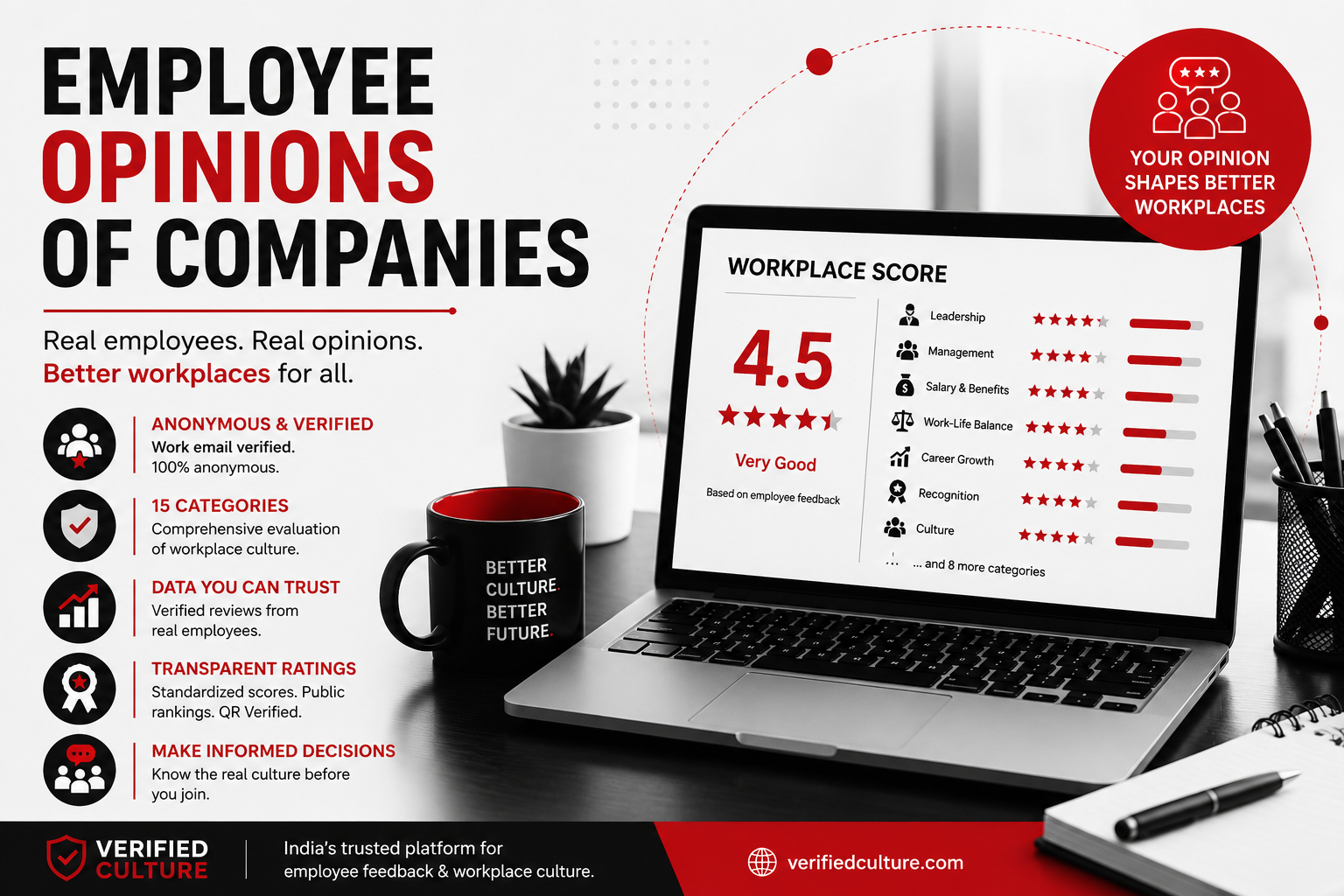
Sub-ratings for categories like culture, compensation, work-life balance, senior leadership, and career growth
Pros and cons sections, written in the reviewer's own words
Advice to management, often the most candid part of the review
Interview experience feedback, especially on platforms like Glassdoor
CEO approval ratings, a metric unique to a handful of platforms
These reviews live alongside salary data, benefits breakdowns, and sometimes leadership Q&A sessions, creating a fairly complete picture of what it's like to actually work somewhere — as opposed to what a careers page or LinkedIn "day in the life" video wants you to believe.
Why Employee Reviews Matter So Much Right Now
1. Job seekers trust peers more than employers
Multiple labor-market surveys over the past several years have shown that jobseekers rank employee reviews among the top three most trusted sources of information about a company, often above the company's own website or recruiter conversations. People know that a careers page is marketing. A review written by someone who sat through six months of reorgs is not.
2. Talent markets have shifted power to candidates
In tight labor markets — and even in cooling ones — skilled candidates have options. When candidates have options, they filter aggressively. A pattern of reviews describing poor management, unclear expectations, or toxic culture can knock a company out of consideration before a recruiter ever picks up the phone.
3. Reviews affect employer brand and, increasingly, valuation
Employer brand has become a boardroom topic. Weak review scores correlate with higher recruiting costs, longer time-to-fill for open roles, and higher voluntary attrition — all of which show up on a P&L eventually. Some investors and analysts now treat employee sentiment data as a soft signal worth watching alongside traditional financial metrics, particularly for consumer-facing and tech companies where culture and execution are tightly linked.
4. Reviews create accountability that used to not exist
Before review platforms, a bad manager could operate for years with limited visibility outside their direct team. Aggregated, anonymous review data — especially when segmented by department or location — surfaces patterns that HR and leadership might otherwise miss or ignore.
The Anatomy of a Useful Review
Not all reviews are created equal. A genuinely useful employee review tends to include:
Specificity — "The onboarding process took three days and no one had set up my accounts in advance" is more useful than "onboarding was bad."
Balance — Reviews that acknowledge both strengths and weaknesses tend to be more credible than reviews that are entirely one-sided.
Context — Role, department, and tenure matter. A one-week contractor's review carries different weight than a five-year engineering manager's review.
Actionable advice — The best reviews don't just vent; they identify what leadership could specifically change.
Common Pitfalls When Reading Employee Reviews
Reading reviews well is its own skill. Here's what to watch for:
Recency bias and mass-review events
A wave of reviews posted in a short window — right after a layoff, a leadership change, or a controversial policy — can skew the overall picture. It's worth checking review dates and looking for clusters.
Astroturfing and incentivized reviews
Some companies, in an attempt to counteract negative sentiment, encourage employees to leave positive reviews en masse, sometimes during onboarding when new hires are least equipped to give an honest assessment. A sudden spike of glowing five-star reviews with generic language ("great culture, great people, great benefits") is a red flag worth noting.
Department and location blindness
A company can have an outstanding engineering culture and a terrible retail-floor culture at the same time. Aggregate scores can hide this. Whenever possible, filter reviews by department, location, or role level.
Survivor bias vs. leaver bias
Current employees may soften criticism out of fear of being identified, even on anonymous platforms. Former employees, especially those who left on bad terms, may be more negative than the median experience. Reading a mix of both — and weighing tenure — gives a fuller picture.
Ignoring the "advice to management" section
This section is often the most revealing part of a review because it's forward-looking and less emotionally charged than the pros/cons lists. Recurring themes here — communication gaps, unclear promotion criteria, understaffing — are usually the most reliable signal.
What Companies Get Wrong (And Right) When Responding
How a company handles its reviews — especially the negative ones — is itself a signal.
Common mistakes:
Ignoring reviews entirely, which reads as indifference
Responding defensively or dismissively, which validates the original complaint
Mass-deleting or disputing reviews instead of addressing substance
Only responding to positive reviews, creating an obvious asymmetry
What good responses look like:
Acknowledging the specific issue raised, without being defensive
Describing concrete steps being taken (not vague promises)
Inviting further conversation through official channels
Following up publicly when changes are actually made
Companies that treat review platforms as a genuine feedback channel — rather than a PR problem to be managed — tend to see sentiment improve over time. Companies that treat them purely as reputational threats tend to see the opposite.
The Data Behind the Trend
Review volume has grown enormous. Glassdoor alone has accumulated tens of millions of company reviews since its founding, and newer platforms like Blind have built entire communities around anonymous, verified-employee discussion — often skewing toward more candid, sometimes more caustic, commentary than the polished format of a star-rating review.
This has also created a secondary market: companies now use "employer branding" and "employee experience" software, sentiment analysis tools, and even dedicated internal teams whose job is to monitor and respond to review platforms — a category that didn't meaningfully exist fifteen years ago.
How Job Seekers Should Actually Use Employee Reviews
Rather than treating the star rating as a final verdict, here's a more useful approach:
Read at least 15-20 reviews, not just the top few sorted by "most helpful."
Sort by role and department if the platform allows it — your experience will resemble people in similar positions more than the company-wide average.
Look for patterns, not outliers. One angry review doesn't define a company. Ten reviews describing the same management problem probably does.
Cross-reference platforms. A company that looks great on Glassdoor but is quietly torn apart on Blind is telling you something about who feels safe saying what, and where.
Bring specific questions to interviews. If reviews mention high turnover on a specific team, ask about it directly. How a company answers is as informative as the review itself.
Weight recency. A cultural problem from four years ago under different leadership may not reflect today's reality — or it might, if leadership hasn't changed.
Where This Is Heading
Workplace transparency is not a passing trend — it's a structural shift in how labor markets function. A few things are increasingly clear:
Verification is becoming a bigger differentiator. Platforms that can confirm a reviewer actually worked at a company (through email domain verification, employment records, or similar) are gaining trust relative to fully anonymous, unverified review sites.
Granularity is increasing. Expect more department-level, team-level, and even manager-level review data over time, not less.
Real-time sentiment is emerging. Rather than static annual snapshots, some platforms are moving toward continuously updated sentiment scores that respond to news events, leadership changes, and layoffs in near real time.
Regulation may eventually catch up. As review data increasingly affects hiring and even capital markets, questions about fairness, defamation risk, and manipulation are likely to draw more legal and regulatory attention.
Final Thoughts
Employee reviews have fundamentally changed the balance of information between companies and the people who might work for them. Used carelessly, they can be misleading — skewed by a handful of loud voices, timing effects, or manipulation. Used well, they're one of the most honest windows available into how an organization actually treats its people, day to day, away from the polish of a careers page.
For job seekers, the discipline is simple: read broadly, read critically, and look for patterns rather than headlines. For companies, the lesson is even simpler: the reviews are already being written. The only real choice is whether to shape the story by treating employees well, or to spend energy managing the fallout after the fact.
Good Place to Work
Organizations that clear the 70% participation threshold and score highly across all 15 culture categories earn verified recognition.
Explore certified workplacesWorst Place to Work
When employees consistently report toxic patterns, the verdict is published — and the company can request a re-survey once it has fixed the issues.
See the red-flag listYour experience decides the verdict
The survey takes about 5 minutes, is fully anonymous, and email verification means one honest response per employee.
Keep reading


Questions about this article?
Send us a note — press, partnerships, or anything you'd like us to cover next.